
Pursuant
How MEV Moved Microsoft SQL Server Reporting Data to AWS with AWS DMS and S3
Client:
Pursuant
Industry:
Fundraising and marketing
Focus:
SQL Server to AWS data migration / Reporting data export / S3 data landing layer
Technologies:
Microsoft SQL Server / AWS DMS / AWS S3 / Apache Parquet
[ about the client/ ]
Pursuant is a fundraising and marketing agency that works with nonprofit organizations on donor engagement, analytics, and direct response campaigns. Its account teams relied on internal reports built from client data, including donor demographics, donation amounts, donation frequency, and campaign response rates.
What Needed to Be Done
Pursuant relied on Microsoft SQL Server as the main data source for internal reporting. The reporting workflow still depended on manual data preparation, which slowed down analysts and made it harder to expand reporting across more clients.
The first job was to create a repeatable way to move reporting data from Microsoft SQL Server into AWS, where it could be stored, transformed, and prepared for downstream analytics.
The first job was to create a repeatable way to move reporting data from Microsoft SQL Server into AWS, where it could be stored, transformed, and prepared for downstream analytics.
Why It Mattered
Pursuant was moving toward a more scalable AWS-based reporting foundation. But before the team could build reliable warehouse models, automate transformations, or connect BI tools, the source data needed to land in AWS in a consistent format.
Without that first data movement layer, every next step would stay fragile: schema management, transformation logic, reporting access, and future client onboarding.
Without that first data movement layer, every next step would stay fragile: schema management, transformation logic, reporting access, and future client onboarding.
What MEV Built
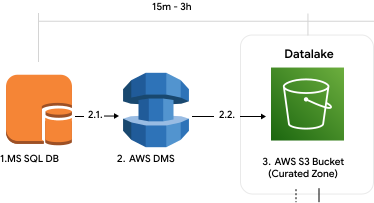
MEV built a data export flow from Microsoft SQL Server to AWS S3 using AWS Database Migration Service. The source data was exported into S3 as compressed Parquet files, creating a structured landing layer for further processing.
This gave Pursuant a repeatable foundation for moving operational reporting data into AWS without relying on manual preparation.
This gave Pursuant a repeatable foundation for moving operational reporting data into AWS without relying on manual preparation.
Technical Flow
01:
Microsoft SQL Server as the source
The reporting data started in Microsoft SQL Server, which held the operational data used for internal reports.
02:
AWS DMS for data export
AWS Database Migration Service exported full data snapshots from Microsoft SQL Server into AWS S3.
03:
S3 as the landing layer
Exported data was stored in AWS S3 as compressed Parquet files.
04:
Source-like structure preserved
The S3 landing layer kept data close to the original database structure, which made it easier to manage schema discovery and downstream transformations.
05:
Ready for warehouse processing
Once in S3, the data could be scanned by AWS Glue Crawlers, represented in AWS Glue Catalog, and transformed into warehouse-ready models with AWS Glue Jobs.
Outcome
Pursuant gained a repeatable data movement path from Microsoft SQL Server into AWS. This became the first layer of the broader reporting data pipeline and made it possible to build the warehouse, automate ETL, and expose reporting-ready data to Tableau.
This case is part of the full case study
MEV Built an AWS Data Warehouse and Automated Reporting Pipeline for Pursuant[ portfolio/ ]
Related Case Studies


The Ball’s In Our Court Now

We’ll get back to you right after reading your message. Thank You!
Tap the button and schedule a call


