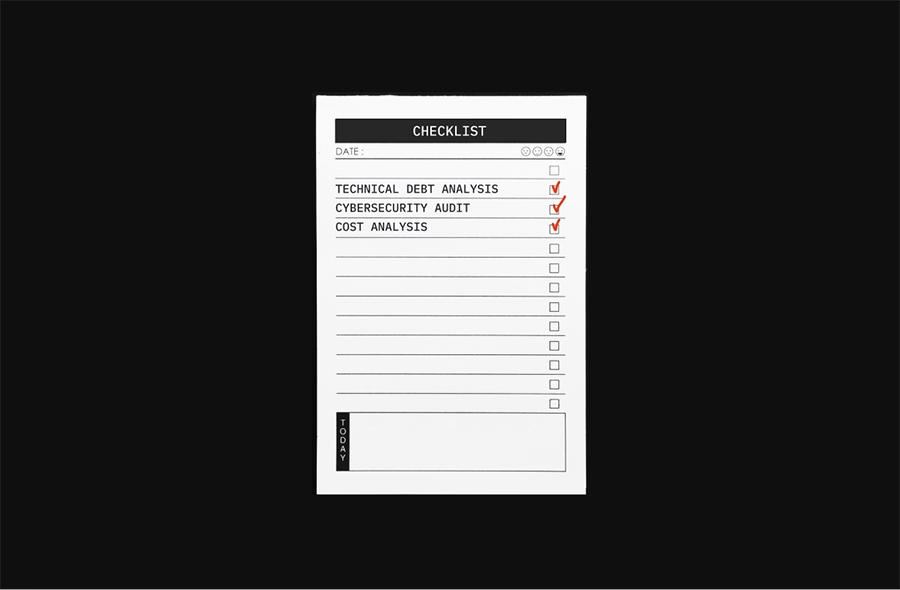

Technical due diligence is a structured audit of a target company's technology and the team behind it, done before an acquisition or investment to price the risk a buyer inherits. KPMG puts 62% of deals below their financial targets, mostly because diligence was weak.
MEV's assessment works in three moves: define the desired state against your business goals, audit the current state of the code and infrastructure, then measure the gap between them. Most serious findings trace back to missing technology governance, which surfaces as undocumented architecture and knowledge that left with the people who built the system.
MEV runs both buy-side and vendor-side technical due diligence in SMB and lower-middle-market software M&A, with extensive expertise in healthcare, data, and AI systems. Reviews take two to four weeks at a fixed fee between $5,000 and $30,000, quoted upfront.
A downloadable 12-component checklist covers what to assess if you run the review yourself.
Technical due diligence is an engineering review of a target company's codebase and infrastructure, run before an acquisition or investment to price the risk you would inherit. Buyers commission it during the diligence window to decide if the technology supports the deal thesis and what fixing it will cost.
You will also see this process called technology due diligence or tech due diligence. Some buyers and advisors use IT due diligence for the same review. We use technical due diligence (TDD) throughout this guide. In an M&A process it runs alongside the financial and legal diligence tracks and covers the product itself.
MEV runs buy- and sell-side technical due diligence on software targets, with senior engineers doing the review hands on. Reviews cost $5,000 to $30,000 depending on the size and complexity of the system, quoted upfront, and take 2 to 4 weeks.
You'll find the full 12-component checklist we use down below free to download.
What Does Technical Due Diligence Cover?
A TDD review covers five areas. Together they answer whether the technology can carry the business plan the buyer is paying for, and what it costs to close the gaps.
Key Components of TDD:
- Codebase Quality: Reviewing the maintainability, scalability, and documentation of the code.
- Infrastructure Assessment: Evaluating the reliability and scalability of hardware, software, and network systems.
- Security and Compliance: Ensuring data protection measures are in place and that systems comply with relevant regulations.
- Technical Team Evaluation: Assessing the skills, processes, and capabilities of the development and IT teams.
- Product Roadmap Alignment: Verifying that the technology strategy supports the company's future goals.
In this article, we’ll break down what a technical due diligence process looks like, what to pay attention to, and how to spot potential red flags. We’ll also share useful checklists and frameworks so you can carry out an assessment independently or be better prepared to work with a partner if needed.
Technical due diligence checklist: all 12 components.

What Are the Red Flags in Technical Due Diligence?
According to KPMG, a global professional services network, 62% of deals don’t hit their financial targets mainly because of poor due diligence. Consequently, the success of your investment depends on how well you do your research and how ready you are to handle the risks and opportunities that come up after you acquire the company.
Sometimes technical due diligence might uncover major red flags that make you rethink the whole acquisition. Here are the warning signs that might make you think twice about buying a tech company:

Heavy technical debt
If technical due diligence reveals serious technical debt, you should carefully consider the cost of rework. Technical debt translates into increased maintenance costs, a slower development process, and diminished system reliability. Inheriting the abandoned technical mess can seriously drain your investment’s value over time.
Incompatibility with your existing systems
Make sure the solution you want to buy can get integrated into your system. Otherwise, you’ll end up dealing with a lot of headaches and extra costs trying to make everything work together.
Non-compliance issues
Watch out for non-compliance problems. These can result in huge fines and legal hassles later on. Plus, it can eat up your time and resources. It’s a risk you don’t want to take.
Keep an eye on these red flags, and make sure you’re fully prepared before jumping into the deal. When deciding on the technical due diligence provider, check if their assessment covers the risks mentioned above, plus those your business requires.
What Does a Technical Due Diligence Assessment Cover?
The technical due diligence checklist varies from company to company and depends on the specific aspects you want to prioritize. But in general, TDD covers some basic topics for assessing the technology. Here is what we focus on when conducting TDD for our clients.

Technology stack assessment
- Architecture: Is the system architecture well-documented and suitable for current and future needs? Does it support modularity and easy integration with other systems? Are architectural changes reviewed and validated through a formal process?
- Scalability: How does the system handle increased loads? Are strategies for horizontal and vertical scaling implemented? Are there any bottlenecks that could hinder future scalability?
- Code quality: Are coding standards clearly defined, documented, and followed? Is there a code review process in place? Are automated tools like linters and static analyzers used to maintain code quality?
- Performance: How is system performance monitored and measured? Are key performance indicators (KPIs) established? Are performance optimizations planned and implemented iteratively?
- Maintainability: Is the codebase well-organized and documented for ease of understanding and further development? Are naming conventions for variables, functions, and classes consistent and meaningful? How easy is it for new developers to get up to speed with the codebase?
Cybersecurity audit
- Vulnerabilities: Are dependencies regularly scanned for vulnerabilities? Is there a process for managing security incidents?
- Compliance risks: Do the components adhere to relevant compliance and security standards (e.g., GDPR, PCI DSS)?
- Security gaps: Is all data-at-rest encrypted (AES/RSA with min 256 bits)? Are security events logged and monitored (e.g. failed auth attempts)?
- Access controls: Are authentication and authorization implemented correctly? Is there a password policy in place?
Integration potential assessment
- Compatibility with existing technologies: Is the system compatible with current software and hardware?
- Tech documentation: Is the codebase properly documented (e.g., comments, README files)? Is business logic clearly defined? Are APIs properly versioned? Are tools in place for automated documentation generation? Are API specifications documented (e.g., OpenAPI, Swagger)?
- Data integration: Are there existing ETL (Extract, Transform, Load) processes in place?
- Interoperability: How easily can the system adapt to new integration requirements?
Technical debt analysis
- Assessment of current technical debt: Are there legacy components that need frequent fixes or updates? Are there any bottlenecks caused by outdated technology that could hinder future growth?
- Resource allocation: Is the team spending more time fixing issues than building new features?
- Projected costs for maintenance or upgrades: What is the estimated cost of upgrading legacy components or migrating to a more modern technology stack?
DevOps and infrastructure review
- Performance review of cloud, servers, and networks: Is deployment automated across all environments (e.g., dev, staging, production)?
- Opportunities to maximize CI/CD automation: Is there a CI/CD pipeline in place for the project? Are CI/CD pipelines monitored for failures?
- Disaster recovery and backup: Is there a disaster recovery plan in place? How often are backups performed, and are they tested regularly?
Cost analysis
Recommendations to optimize operational expenses:
- Cloud infrastructure costs: Is it possible to reduce cloud spending by optimizing storage?
- Development and maintenance costs: Are there opportunities to reduce the time spent on manual processes by automating certain tasks?
- Tech stack upgrade costs: Are there any compatibility or integration issues that might increase the upgrade cost?
This is not the full technology due diligence checklist we use at MEV. We get to that below. For now, using our example, let’s see how due diligence works.
How Does the Technical Due Diligence Process Work?
Technical due diligence usually takes around 2-4 weeks, depending on how complex the system is and how deep we need to dig. Regardless, MEV due diligence framework always has three key components: auditing the current state, defining the desired one, and assessing the gap between those two. Here’s what that looks like:
- Definition of the desired state
Before we start the assessment itself, we clarify your business and technical requirements and then align our tech assessment with your long-term goals, whether that’s user growth, expanding features, or entering new markets. For example, if you plan to add new features, we’d assess how easy it is to add them without disrupting what’s already working.
- Audit of the current state
Next, we kick off the core part, the actual assessment of the target company’s existing technology. It includes reviewing the source code, scalability, security, outdated technologies, components that may need replacement, and more.
- The gap between the two
Finally, our team evaluates the project based on how the desired state differs from the current one.
This focused structure matters because in M&A, speed and relevance are just as important as technical depth.
Roman, Founder of a marketplace connecting companies and investors with vetted M&A advisors, says fast-moving deals require focus rather than exhaustive technical review:
In our experience, clients fall into two groups: those with technical requirements for due diligence and those without. We approach technical due diligence in two ways.

Tech requirements-driven approach
In this case, the client comes to us with specific tech requirements and wants to see if the target company’s tech will be compatible with their existing systems. For example, they might need the target’s tech to match their standards for cloud providers, ensuring data storage locations are in regions meeting compliances.
So, we check if the target’s tech meets the client’s standards and figure out the cost to get it in line if it doesn’t. It involves assessing how much effort and resources will be needed to upgrade code, move data, or whatever is required to make everything fit together.
Business requirements-driven approach
Sometimes, the client doesn’t have specific tech requirements and is more focused on the business goals of the deal. In such situations, we take those business goals and translate them into tech terms to see if the current technology can handle them. We also estimate how much it’ll cost to scale the tech to meet those goals. For example, if the client is looking to increase the number of users, we’d look at how much it’ll take to upgrade the target’s infrastructure to support that growth.
As practice shows, no matter what specific requirements buy-side companies have for due diligence, they usually run into the same challenges when checking out the target company’s tech. Let’s briefly outline the most common ones we uncover and address.
What Risks Does Technical Due Diligence Uncover?
They say, forewarned is forearmed. When you know the technical ins and outs of the target company, you can decide if you have the time, money, and resources to fix any issues that might come up. So here are the common pitfalls our team can help you identify before acquiring a company.

Tech can’t scale
In most cases, growth is the goal when buying a tech company. So why go for an acquisition that won’t scale in the future? If the tech can’t keep up, you can lose clients, money, and, most importantly, time. That’s why we do tech DD, to make sure the acquisition won’t hold you back in the future.
McKinsey found that companies with severe tech debt are 40% more likely to stall or cancel a modernization project. If you are buying for growth, that is the risk you inherit.
Security issues and non-compliance
Data breaches, fines, and penalties – these are just the start of what you might face with security vulnerabilities or non-compliance in the target tech. But it gets worse. Fixing these issues diverts funds from other important areas. Clients may leave for more secure competitors, while lawsuits from affected parties can further drain your resources. Don’t let that happen to you. If you team up with MEV, our technology due diligence service covers security and compliance to give you clear estimates and peace of mind.
IBM's 2026 Cost of a Data Breach Report puts the global average breach cost at $4.99 million, up 12% year over year and the highest on record. That number lands on the acquirer, not the seller.
Overhyped tech to drive valuation
Sometimes, companies splash out on pricey technologies they don’t need, thinking it will help them beat the competition. For example, imagine a company spending a fortune on blockchain for their supply chain when a simple database would do the job just as well. It may look impressive, but it doesn’t necessarily deliver real business impact or sustainability.
That’s why we carefully evaluate whether the tech isn’t just for show and actually adds real, long-lasting value.
Inefficient processes
Outdated or poorly designed workflows are a hidden drain on your budget. When processes aren’t optimized, they create bottlenecks, delay project timelines, and lead to the unnecessary duplication of efforts. For instance, if a target company relies on a legacy system that requires manual data entry, there is a higher risk of human error, slower decision-making, and delays in critical processes. These inefficiencies not only cost time but also increase operational costs, as more resources are needed to manage, correct, and oversee these processes.
McKinsey found that tech debt acts like a tax on innovation: CIOs report losing 10% to 20% of their new-product budget just to fix existing debt.
Poor data handling
If data is not properly structured, stored, or maintained, it can lead to inaccurate insights and missed opportunities. Imagine a company that keeps customer data in different formats across several systems. It becomes hard to see clear patterns in customer behavior or trends. That’s why, during tech due diligence, we take a close look at how the software solution of the target company manages data, how it’s collected, stored, and analyzed, and what tools are used to keep it accurate and secure.
Gartner puts the average annual cost of poor data quality at $12.9 million per organization. In an acquisition, that cost transfers with the asset.
Inappropriate tech stack
When buying a tech company, you definitely don’t want to deal with a tech stack that hinders your growth. If the company uses proprietary tech or platforms that don’t play well with others, it will be tough to innovate. The same goes for using outdated or less common technologies that aren’t getting updates or support anymore. So during the due diligence process, it’s important to check if the tech stack is something that can grow with you and support your long-term plans.
Why Do Technical Risks Accumulate in Acquisition Targets?
We’ve done several tech due diligence assessments for our clients, and most problems come from the lack of a systematic approach to technology governance. Let’s look at some possible scenarios of how it happens.
Let’s say you acquire a tech company that’s been around for a few years. Over time, different teams have built parts of the system without properly documenting their work. The architecture, the blueprint of the system, is rarely updated or reviewed. The outcome? When you need to update a feature or fix a bug, you can’t do it efficiently. The documentation is either missing or incomplete, creating big knowledge gaps. Your team has to piece together how everything will work together, which makes managing, updating, or troubleshooting the system a real headache.
Here is another example. Many companies struggle with handover processes. It’s not just about incomplete documentation. Other issues include unclear responsibilities, missing permissions, and incomplete issue logs. For example, if roles aren’t clearly defined, the new team won’t know who’s in charge of what. And if they don’t get the right access to systems and tools, they can’t do their job properly from day one.
We could go on listing countless scenarios describing tech snags revealed during reviews. With MEV, you get a scored technical due diligence report that highlights these issues before you finalize the deal.
What do you get as a result of our evaluation?
After the technical due diligence review, you get a report with our findings and a comprehensive analysis of architecture, infrastructure, scalability, code quality, security, and CI/CD. In addition to these findings, the report includes actionable recommendations including practical steps and strategies to improve performance, mitigate risks, and ensure the tech stack is ready for future challenges.
If you want to run technical due diligence yourself, we've prepared a checklist to make it easier.
Download the full 12-component checklist we use at MEV.
The Technical Due Diligence Checklist we use at MEV
Our technology due diligence checklist covers 12 main components:
Each component comes with a set of key questions or checkboxes designed to see how effectively the target company adheres to specific requirements.
Team collaboration checklist
Version control checklist
Architecture checklist
How Much Does Technical Due Diligence Cost?
MEV's technical due diligence services typically range from $5,000 to $30,000, depending on the size and complexity of the system. As we want to align our assessment with the client’s long-term goals and plans, having a person with a deep understanding of the seller company’s technology, architecture, and goals would be helpful. Having them involved leads to smoother communication and a more thorough evaluation of the system, leaving no room for bias or personal preferences.
What Access Does a Technical Due Diligence Provider Need?
If you decide to partner with MEV for technical due diligence, you provide access to the following 11 systems. Most of them are read-only, and access terms get set in the NDA before any review starts. For the documents that sit alongside these access requests, see our technical due diligence document request list.
What Should You Do Next?
Technical due diligence takes 2 to 4 weeks and costs $5,000 to $30,000 for most software targets. Against a deal where tech debt can run 20% to 40% of the technology estate's value, that is a small line item.
If you are on the buy side, start the review during or immediately after LOI, while you still have exclusivity and room to adjust terms. Scope differs before and after that line, so decide which review you are running before you commission it.
f you are preparing to sell, run a pre-deal audit 6 to 12 months out so you have time to fix what the audit finds.
Talk to us about technical due diligence and we will scope the review against your deal.
Across our technical due diligence assessments at MEV, the same patterns keep coming up. One is unmaintained architecture, where fixing a bug starts with figuring out how the system works. Another is poor handovers, where undefined roles leave incoming teams spending their first weeks asking who owns what. Those patterns shaped this guide. Beyond definitions, it covers the 12 components our engineers score and what an assessment costs.
Scope depends on the deal. A $3M SMB target rarely needs all 12 components at full depth. The buyer mostly needs to know if the product is stable and whether a single developer holds the whole system in their head. A platform acquisition with multiple product lines and regulated data shifts the weight to compliance and integration costs.
We published our 12-component checklist so you can understand how TDD works and what scope your deal may need.
FAQ
How much does technical due diligence cost?
Technical due diligence on a software target typically costs $5,000 to $30,000, quoted upfront. The range depends on system size, complexity, and how many products or regions the review covers. A light pre-LOI screen sits at the low end. A full post-LOI confirmatory audit sits at the high end.
How long does technical due diligence take?
The core audit runs two to four weeks for most engagements at MEV, depending on system size, complexity, and how quickly access is granted. Larger deals with multiple product lines, cross-region systems, or heavy legacy components take longer, particularly when vendor interviews or remediation planning are in scope.
What is the difference between technical and financial due diligence?
Technical due diligence reviews the product: codebase, infrastructure, security, and the team that maintains it. Financial due diligence reviews the numbers. Both run in parallel during the diligence window and feed the same valuation decision.
What is the difference between sell-side and buy-side technical due diligence?
Sell-side TDD is commissioned by the company preparing for sale, to find and fix technical issues before buyers arrive. Buy-side TDD is commissioned by the acquirer, to validate what the seller claimed. Sell-side work makes a company ready for market. Buy-side work tests whether the deal is worth doing.
When should you conduct technology due diligence?
Buyers should engage during or immediately after the LOI phase, while exclusivity still leaves room to adjust terms. Sellers should run a pre-deal audit six to twelve months before going to market, so there is time to remediate what it finds. The scope differs sharply on either side of the LOI, which we break down in pre-LOI vs post-LOI technical due diligence.
What is included in a technical due diligence report?
A scored assessment with a risk matrix, an executive summary, and technical appendices. The report also carries a remediation roadmap with cost and timeline estimates, so findings translate into a number you can take into negotiation rather than a list of concerns.
How do you prepare for technical due diligence?
Gather architecture diagrams, data flows, API documentation, and infrastructure maps. Prepare read-only access to source code repositories, CI/CD pipelines, logs, and monitoring tools. Document your security and compliance practices, and disclose known technical debt rather than waiting for the audit to surface it. Sellers who prepare in advance lose less value to surprises.
Can consultants assist with IT due diligence for M&A?
Yes. Buyers often bring in external consultants for IT due diligence, and those consultants usually partner with specialized engineering firms to run the technical review itself. MEV works both ways: directly for acquirers, and alongside advisors who need engineering depth on a deal.